
How Casinos Use Personalisation for Games and Offers in 2026
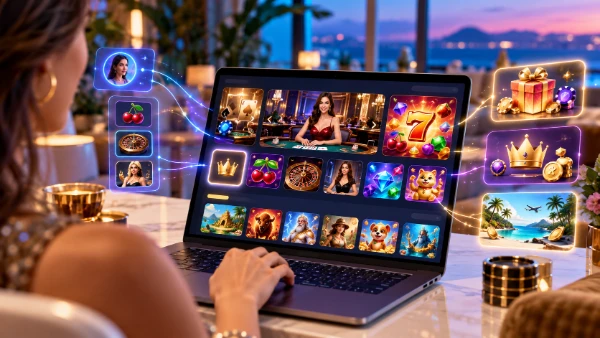
Personalisation has become a normal part of the online casino experience in 2026, although players do not always notice it happening. Two people visiting the same casino can now see different games near the top of the lobby, different promotional messages, different loyalty rewards and even different reminders about their gambling activity. This is possible because casinos can analyse information such as previously played games, favourite categories, session frequency, preferred payment habits, promotional history and responses to earlier messages. Modern systems can process much of this information while a player is active rather than relying only on reports created the following day. The aim is usually to make a large casino catalogue easier to navigate and communications more relevant, but personalisation also creates important questions about privacy, responsible gambling and how far operators should go when adapting an experience to an individual. In regulated markets, these limits are becoming just as important as the technology itself.
How Casinos Personalise the Games Players See
The most visible form of casino personalisation in 2026 is the organisation of the game lobby. Large online casinos may offer thousands of slots, live dealer tables, instant-win games, jackpots and traditional table games. Showing exactly the same order to every visitor is increasingly impractical because only a small part of the catalogue can appear on the first screen. Instead, a casino can use previous activity to decide which titles or categories are likely to be most relevant to a particular player. Someone who regularly chooses live blackjack may therefore see blackjack tables and related live games higher in the lobby, while a player who mainly uses low-volatility slots may receive a different selection.
This does not normally mean that the rules, return to player or mathematical behaviour of a game change for an individual. Personalisation mainly affects discovery: which games appear first, which categories are recommended and which titles are included in sections such as “Recommended for You”, “Because You Played” or “Recently Played”. The underlying certified game remains the same for eligible players in the same regulated market. That distinction is important because personalising the presentation of casino content is very different from secretly changing the mechanics of a game according to an individual player’s history.
By 2026, some suppliers are taking recommendation systems considerably further than simple lists of recently played titles. Future Anthem and EveryMatrix announced in June 2026 that their casino content recommendation technology could use game metadata and machine-learning models across more than 25,000 games to build individualised lobby carousels in real time. The companies reported results from live deployments including a 5–8% increase in net gaming revenue and a 2–2.5-fold increase in the number of games played. These figures come from the suppliers themselves rather than an independent industry-wide study, so they should not be treated as universal results. They nevertheless illustrate how game recommendations have moved from basic sorting towards continuously changing selections based on actual player behaviour.
From Player Segments to Individual Game Recommendations
Casino personalisation traditionally relied heavily on segments. An operator might place players into broad groups such as new customers, slot players, live casino users, frequent visitors or inactive accounts. Everyone in the same group could then receive similar game recommendations and communications. Segmentation is still widely used because it is straightforward and useful, but newer systems can add an individual layer. Instead of assuming that all slot players behave alike, the casino can consider which studios, themes, game formats and session patterns appeal to each account.
The information used for recommendations can include games opened recently, how often particular categories are played, the time of day at which a customer usually logs in, device type and the way previous recommendations were used. A player who repeatedly returns to roulette does not need the same lobby arrangement as somebody who spends most sessions switching between new video slots. Likewise, a person using a smartphone may benefit from a different ordering from somebody playing mainly on a desktop computer. The practical goal is not to predict every choice perfectly, but to reduce the amount of searching required in a catalogue that may contain several thousand titles.
Real-time information has made these recommendations more responsive. If a player starts choosing live games more frequently after previously playing mostly slots, the lobby does not necessarily have to wait weeks for the account to be moved into another fixed segment. Current CRM and recommendation systems can respond to recent activity much sooner. Fast Track, for example, describes systems in which bets, deposits and sessions update a customer profile as they occur, while its 2026 AI tools allow casino teams to analyse behaviour and organise individual communications using natural-language instructions. The important change is therefore not simply the use of artificial intelligence. It is the ability to combine recent activity with longer-term preferences and adapt what the customer sees without requiring staff to redesign every lobby manually.
How Offers and Casino Communications Become Personalised
Game recommendations are only one part of personalisation. Casinos can also adapt bonuses, loyalty rewards, messages and the timing of communications. A generic campaign might send the same promotion to hundreds of thousands of accounts, whereas a personalised approach can consider whether a customer prefers slots, live casino games or another eligible product, whether they have responded to similar offers before and which communication channel they have agreed to receive. The casino may also distinguish between an active customer, a recently registered player and somebody who has not logged in for several weeks. As a result, two customers can receive very different communications even when they hold accounts with the same operator.
The timing of an offer can be personalised as well. Sending every email at the same hour is simple, but it may be ineffective if one customer usually interacts with casino communications in the morning and another mainly uses the site in the evening. Current CRM systems can use previous engagement to identify a more appropriate time or channel for each account. Email, SMS, push notifications and on-site messages can therefore be managed separately. A customer who rarely opens promotional emails but regularly uses approved app notifications may receive fewer emails and more relevant in-app communication, provided the necessary marketing permissions are in place.
Personalisation is also increasingly connected with loyalty schemes. Traditional programmes commonly awarded the same points or status benefits to everyone who met a particular threshold. More recent systems can combine fixed loyalty rules with individual challenges, selected rewards or game-specific promotions. This can include a challenge related to a category a player already uses, a reward attached to an eligible favourite game or a communication connected with the player’s current loyalty stage. The casino still has to publish or provide the applicable terms, wagering conditions and eligibility requirements. Personalisation changes who receives or sees an offer; it does not remove the operator’s responsibility to explain how the promotion works.
Why Real-Time Data Is Changing Casino Offers
The biggest practical difference in 2026 is the speed at which information can be used. Older casino marketing often depended on data collected during one period, analysed later and used for the next campaign. That model can produce obvious mismatches. A player who stopped using a particular game category might continue receiving promotions related to it because the marketing list had been created from old information. Real-time or near-real-time systems can reduce this delay by updating customer profiles during or shortly after activity. The result can be fewer irrelevant messages and a closer connection between current preferences and the content shown.
Artificial intelligence is increasingly used to help decide what is sometimes called the next best action. In simple terms, the system evaluates several possible actions and identifies the one considered most relevant for a particular account. That action might be displaying a game recommendation, sending an approved promotional message, offering a loyalty reward, showing no promotion at all or presenting a safer-gambling interaction. The system can consider factors such as preferred game type, previous response to rewards, communication history, recent activity and lifecycle stage. Casino staff can then set rules defining which actions are permitted and under what circumstances.
This development also changes the work carried out by casino CRM teams. Fast Track announced an expansion of its AI-assisted CRM tools in January 2026 that allows staff to analyse activity, create customer groups and organise multi-channel campaigns through natural-language instructions. Systems of this type can reduce the manual work involved in creating thousands of individual variations. Human oversight remains important, however. Automated recommendations can misunderstand unusual behaviour, place too much emphasis on short-term activity or repeatedly select similar content. Casinos therefore need testing, control groups and clear limits rather than assuming that an automated prediction is correct simply because it was generated from a large amount of data.

Privacy, Player Control and Responsible Personalisation
Personalisation depends on data, which means privacy rules directly affect how it can be used. In the European Economic Area, the General Data Protection Regulation continues to regulate the processing of personal data and profiling in 2026. Casinos need a valid legal basis for processing personal information and must provide appropriate information about how that data is used. GDPR also contains specific safeguards concerning decisions based solely on automated processing when those decisions produce legal effects or similarly significantly affect an individual. Players therefore should not assume that every piece of information collected during casino use can automatically be used for any form of personalisation.
Marketing permissions create another boundary. The UK Gambling Commission introduced stronger direct-marketing choice requirements for remote operators from 1 May 2025. Customers must be given more granular control over the types of gambling marketing they receive, including choices relating to product and communication channel. This matters for personalisation because an operator may have enough behavioural information to predict that a customer would respond to a particular casino offer, but that does not override the customer’s marketing preferences. Personalisation must work within the permissions that have actually been given.
Privacy regulators have also highlighted the risks of targeting vulnerable people. In January 2025, the UK Information Commissioner’s Office specifically used gambling advertising as an example when discussing potentially harmful online tracking, noting the risk of people with gambling problems being targeted on the basis of their browsing activity. By 2026, this issue has become central to the distinction between useful personalisation and harmful targeting. Data can help a casino make navigation more relevant, but using the same information to intensify marketing when behaviour indicates possible harm creates a very different regulatory and ethical problem.
When Personalisation Must Give Way to Player Protection
Responsible-gambling requirements can effectively reverse the usual logic of personalisation. A commercial system may identify a customer as highly engaged and therefore potentially responsive to another promotion. A safer-gambling system may examine the same account and identify changes in spending, session behaviour or other indicators that require intervention instead. In Great Britain, Gambling Commission rules require remote operators to monitor customer activity for indicators of gambling harm and to tailor action according to the level of risk identified. Where strong indicators of harm are present, licensees must prevent marketing and the take-up of new bonus offers.
Automation can be used for these protective measures as well. The Gambling Commission requires strong indicators of harm to be acted on in a timely manner through automated processes, while also requiring manual review of automated action in each individual case and allowing the customer to contest an automated decision that affects them. This is an important feature of personalisation in 2026: the same broad technologies used to select games and communications can also be used to limit promotional activity, trigger safer-gambling messages or escalate an account for human review. Personalisation is therefore no longer only a retention or marketing tool.
For players, the practical effect is that casino experiences are likely to become increasingly individual without becoming completely unrestricted. Game lobbies can react to preferences, promotional messages can reflect previous activity and loyalty programmes can offer more relevant rewards, but data protection, marketing consent and responsible-gambling rules place boundaries around those systems. The most significant development in 2026 is not simply that casinos know more about customer behaviour. It is that they can react to that information much faster and across more parts of the customer experience. The quality of that personalisation depends on whether it makes navigation and communication genuinely more relevant while respecting consent, privacy and signs that promotional engagement should be reduced rather than increased.