
Surrender in Blackjack: When This Option Actually Reduces Losses
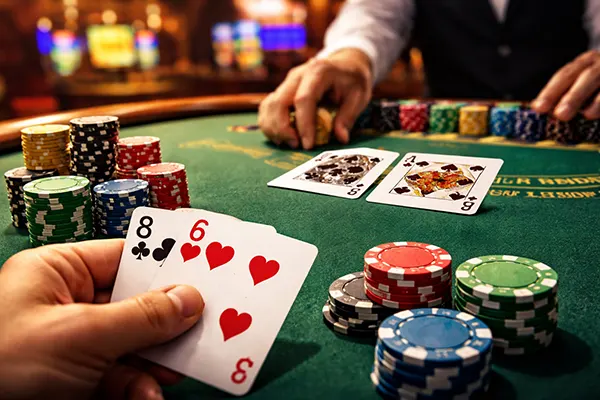
The surrender option in blackjack is often overlooked, yet it remains one of the few decisions that can directly limit losses rather than chase wins. In 2026, with most reputable casinos still offering variants of early or late surrender, understanding when to use this move can significantly improve long-term results. This article explains the mechanics, the mathematics behind the decision, and real scenarios where surrender is justified.
How Surrender Works and Why It Matters
Surrender allows a player to forfeit half of their original bet and end the hand immediately after the initial deal. Instead of playing out a weak position against a strong dealer upcard, the player cuts potential losses by 50%. This rule is not universal, but it is still available in many online and land-based blackjack tables as of 2026.
There are two main types: early surrender and late surrender. Early surrender lets the player fold before the dealer checks for blackjack, which is more advantageous but rarely offered today. Late surrender, more common, is only available after the dealer confirms they do not have a natural blackjack.
The value of surrender lies in probability. Certain hands have such a low chance of winning that continuing to play them results in a higher expected loss than giving up half the stake. In these cases, surrender becomes a mathematically sound decision rather than a defensive reaction.
Differences Between Early and Late Surrender
Early surrender offers a stronger advantage because it allows the player to avoid even the risk of an automatic loss against a dealer blackjack. This can reduce the house edge by around 0.6% depending on rules, which is significant in blackjack terms.
Late surrender, while less powerful, still reduces the house edge by approximately 0.07% to 0.1%. Although the margin seems small, over hundreds or thousands of hands, it contributes to a more stable bankroll.
In modern blackjack tables, late surrender is the standard option. Players should always check the rules before starting a session, as the presence or absence of surrender can influence overall strategy decisions.
When Surrender Is the Correct Move
Basic strategy charts provide clear guidance on when surrender should be used. The most common scenarios involve weak player hands facing strong dealer upcards, where the probability of losing exceeds 75%.
One of the classic examples is holding a hard 16 against a dealer’s 9, 10, or Ace. Statistically, this is one of the worst positions in blackjack. Hitting risks busting, while standing gives the dealer a strong advantage. In this case, surrender minimises expected loss.
Another key situation is hard 15 against a dealer’s 10. While some players prefer to hit, the numbers show that surrendering is often the better long-term decision, particularly in multi-deck games.
Hands That Justify Surrender in Practice
Hard 16 versus dealer 9, 10, or Ace remains the most consistent surrender scenario. This hand combination has very poor odds regardless of whether the player hits or stands, making surrender the most rational option.
Hard 15 versus dealer 10 is another situation supported by statistical models. Although the difference between hitting and surrendering is narrow, surrender slightly reduces the expected loss over time.
In some rule sets, surrender is also recommended for soft 17 against a dealer Ace, but this depends on specific table rules such as whether the dealer hits or stands on soft 17. Players should always align decisions with the exact rule set in use.
Common Mistakes and Misconceptions
A frequent mistake is treating surrender as a sign of defeat rather than a calculated move. Blackjack strategy is built on expected value, not individual outcomes, and surrender is part of that framework.
Another misconception is overusing surrender. Some players surrender too often, especially when facing moderate hands. This reduces potential winnings and shifts the balance unnecessarily in favour of the house.
Ignoring table rules is also a problem. Not all blackjack games include surrender, and some variations change optimal strategy. For example, single-deck games may require different decisions compared to six- or eight-deck tables.
How to Use Surrender Without Overdoing It
The most effective approach is to follow a basic strategy chart tailored to the exact game conditions. This ensures surrender is used only in mathematically justified situations rather than based on intuition.
Bankroll management also plays a role. Surrender helps preserve funds during losing streaks, allowing players to extend sessions and reduce volatility without increasing risk.
Finally, discipline is essential. Even when surrender feels counterintuitive, sticking to proven strategy ensures that decisions remain consistent and grounded in probability rather than emotion.